BattCycle converts black mass into high-purity, battery-grade raw materials for the EV supply chain, helping OEMs and manufacturers achieve zero waste and meet global sustainability mandates.
Learn MoreContact Us
The Dry Discharging Advantage
BattCycle’s patented technology outperforms conventional processes by eliminating fluorine pollution and maximizing black mass purity, resulting in higher metal recovery rates.
Conventional Wet Process
Salt Water Discharging
High Pollution Risk
Generates chlorine & fluorine gases (HF). Requires massive wastewater treatment infrastructure.
Low Quality Yield
Black mass is contaminated by brine. High impurity content makes extraction inefficient and costly.
BattCycle Solution
Dry Discharging Process
Zero Fluorine Pollution
No brine contamination. Explosion-risk free environment ensuring safety.
High Purity Black Mass
Our dry process finely separates impurities, enabling efficient extraction into battery-grade materials.
Patented System: Battery Crushing Treatment System (TW, JP)
Repurposing Evaluation: UL 1974 Module Discharging
Critical Material Recovery
We recover strategic metals from black mass with high precision. Our output meets battery-grade specifications, ready for direct re-entry into the supply chain.
End-of-Life Batteries
Collected from electric vehicles and energy storage systems at end of life. Controlled discharge safely releases residual energy and prepares the batteries for downstream recycling.
Black Mass
A key intermediate in lithium-ion battery recycling, containing lithium, nickel, and cobalt. Our dry discharge technology preserves material purity and consistency, improving downstream refining efficiency.
Lithium Carbonate
A core lithium source for lithium-ion battery materials.
Nickel Sulfate
A key material for high-energy lithium-ion battery cathodes.
Cobalt Sulfate
A material used to improve stability and lifespan in lithium-ion batteries.
Secondary Recovered Materials
Cu
Copper
Recycled Metal
Al
Aluminum
Recycled Metal
Fe
Iron
Recycled Metal
C
Graphite
Low-Grade
Circular Solutions for Supply Chains
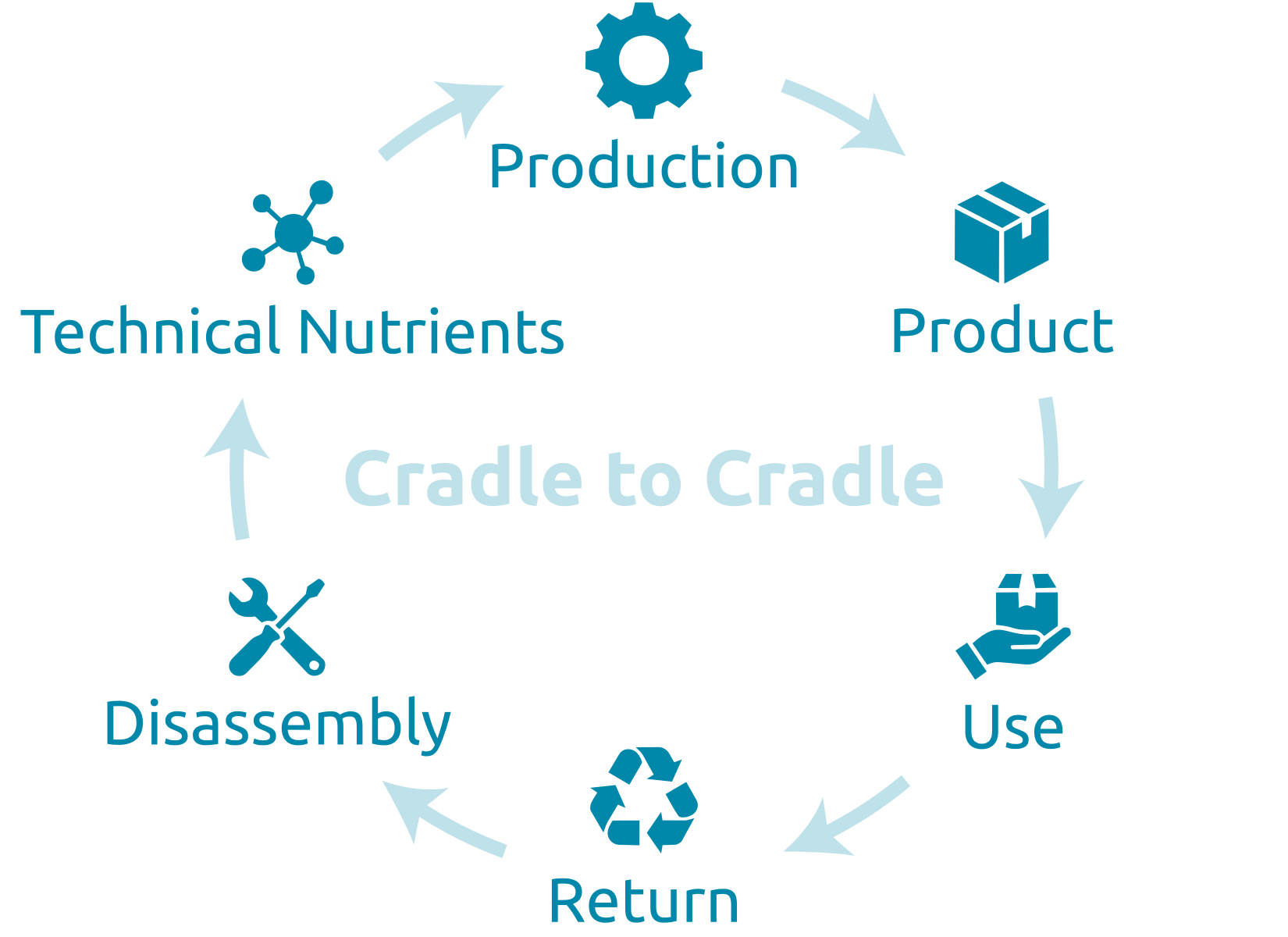
BattCycle supports a cradle to cradle, closed-loop EV supply chain by reintegrating recovered materials into manufacturing and providing transparent, verified carbon footprint data to support supply chain decarbonization and global ESG standards.
ISO 14064-1
Focuses on organization-level greenhouse gas accounting, providing a verified overview of BattCycle’s total carbon emissions.
Verified total CO₂ emissions: approximately 32.70 tons.
ISO 14067
Focuses on the carbon footprint of individual products, enabling transparent, unit-based carbon data that supports low-carbon procurement and supply chain decarbonization.
Projected carbon footprint (nickel sulfate, after mass production): 1.5548 kg CO₂e.
United Nations SDGs
Committed to 9 key goals, aligning with global sustainability targets.
No Poverty
Zero Hunger
Good Health and Well-being
Quality Education
Gender Equality
Clean Water and Sanitation
Affordable and Clean Energy
Decent Work and Economic Growth
Industry, Innovation and Infrastructure
Reduced Inequalities
Sustainable Cities and Communities
Responsible Consumption and Production
Climate Action
Life Below Water
Life on Land
Peace, Justice and Strong Institutions
Partnerships for the Goals
Contact Us
Get in touch to request a quote for raw materials or to explore recycling and partnership opportunities with BattCycle.
battcycle@batt-cycle.com
Taiwan (HQ)
22F-10, No. 213, Chaofu Rd., Xitun Dist.
Taichung City, Taiwan
Taiwan (Factory)
No.22, Luxin Rd. Changhua Costal Ind. Park
Lukang Area, Changhua County
Japan
Room 202, Yasuda Building No. 2
3301 Fukaizawa-cho, Naka-ku, Sakai-shi, Osaka
China
Room 1A08, Block C, Jianxing Building
Youth Entrepreneurship Park
No. 18 Longhua Construction Rd, Shenzhen
© BATT. CYCLE Materials Co., Ltd.